
PMS symptoms are the physical and emotional changes in the two weeks before your period that ease once it starts: mood swings, irritability, anxiety, tiredness, bloating, sore breasts, headaches, spots and cravings. Four in ten women get them, according to the RCOG. What makes it premenstrual syndrome is the timing, and your cycle is one of the things I look at with each client at Bia Beo.
If the same rough week turns up before every period, you’re not imagining it. Below are the symptoms the HSE, NHS and RCOG list, a two-cycle diary that shows whether yours follow the PMS pattern, and how I work with it.
What are the most common PMS symptoms?
The most common PMS symptoms are mood swings, feeling irritable or low, bloating and sore breasts. The NHS, the HSE and the Royal College of Obstetricians and Gynaecologists (RCOG) each publish their own list. All three share a core of five symptoms, and each adds others:
| Symptom | NHS | HSE | RCOG |
|---|---|---|---|
| Mood swings | Listed | Listed | Listed |
| Feeling irritable | Listed | Listed | Listed |
| Bloating | Listed | Listed | Listed |
| Sore or tender breasts | Listed | Listed | Listed |
| Spots, greasy hair or other skin and hair changes | Listed | Listed | Listed |
| Feeling low or depressed | Listed | Not listed | Listed |
| Feeling upset, anxious or emotional | Listed | Not listed | Listed |
| Tiredness or trouble sleeping | Listed | Not listed | Listed |
| Headaches | Listed | Not listed | Listed |
| Changes in appetite, food cravings | Listed | Not listed | Listed |
| Cramping | Listed | Not listed | Not listed |
| Loss of interest in sex | Not listed | Listed | Not listed |
| Feeling clumsy | Not listed | Not listed | Listed |
From the NHS PMS page, the HSE Periods page and the RCOG patient leaflet “Managing premenstrual syndrome (PMS)”, read 17 November 2026. “Not listed” means that source leaves it off its short list, not that it isn’t a PMS symptom.
You won’t have all of these, and yours may not be the same every month. The RCOG says symptoms “can vary from month to month, although they tend to form a pattern over time.”
When do PMS symptoms start and stop?
PMS symptoms start in the two weeks before your period and usually ease once it begins. The RCOG leaflet says they “often disappear by the end of your period”, and the HSE says they “disappear a few days afterwards”.
The RCOG guideline for doctors, Green-top Guideline No. 48, adds the part most symptom lists leave out. For it to be PMS, symptoms come in the second half of your cycle (the luteal phase), lift as your period begins, “which is then followed by a symptom-free week.” They also have to cause real problems in your daily life.
That’s the difference between “I’m a bit off before my period” and PMS. One woman on an Irish forum put it better than any guideline:
“I’m wildly unreasonable for about 4 days before mine, and what people don’t realise is that you 100% think it’s everyone else, until you actually get your period.” (r/AskIreland, 2024)
I often say your cycle is like a monthly report card. When the same rough week turns up every month and clears with your period, your body is telling you something. Let’s listen.
How common is PMS?
Four in ten women (40%) have symptoms of PMS, and 5 to 8% of those have it severely, according to RCOG Green-top Guideline No. 48. None of these sources gives a figure for Ireland.
How do you know if it’s PMS? Track two cycles
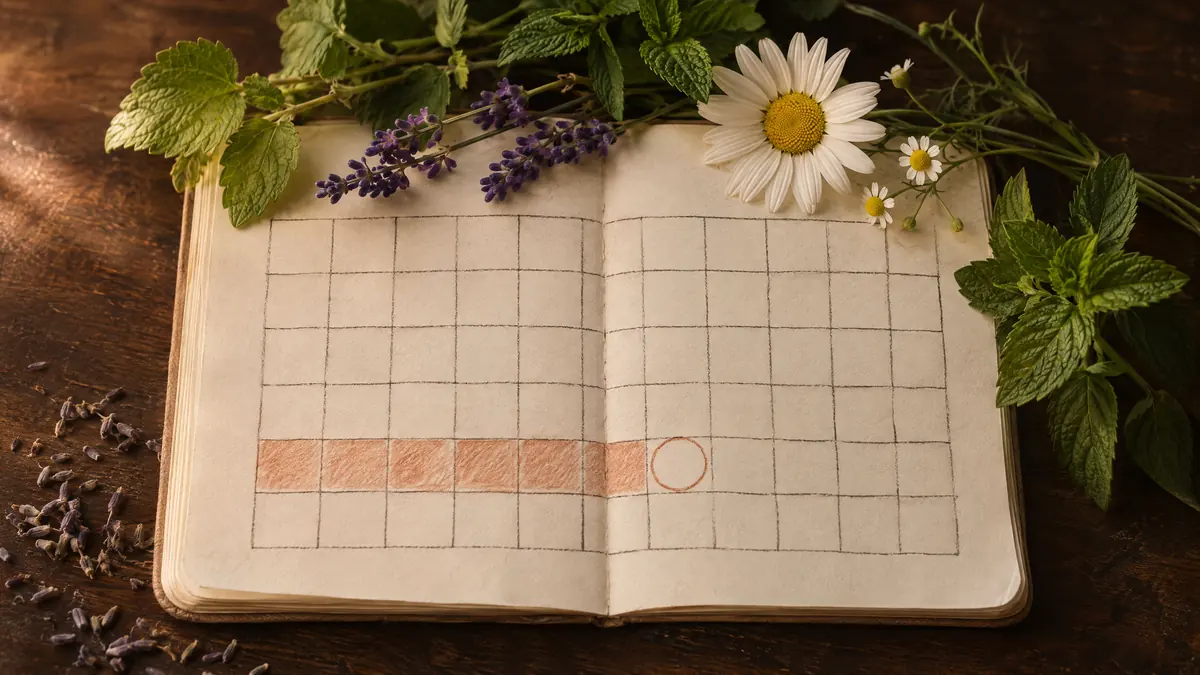
The way to know is to write your symptoms down for two cycles in a row, as they happen. The RCOG guideline asks for diaries over “at least two consecutive menstrual cycles” before any treatment, because remembering symptoms afterwards “is unreliable”. The NHS gives the same advice and suggests you bring the diary to your GP.
A notebook is enough. Each evening, write one line:
| Column | What to write |
|---|---|
| Date | Today’s date |
| Cycle day | Day 1 is the first day of your period |
| How I felt | Mood, energy, sleep, cravings, in your own words |
| My body | Bloating, breasts, skin, headaches, pain |
| Did it get in the way? | Not at all, a bit, or a lot (work, family, friends, sleep) |
After two cycles, look at where the “a bit” and “a lot” days sit. If they bunch in the fortnight before your period and clear within a few days of it starting, with a calmer week after, that’s the pattern the RCOG describes. If they’re spread across the whole month, that isn’t the pattern the RCOG describes as PMS. Either way, the diary gives you and your GP, or you and me, something real to look at.
What’s the difference between PMS and PMDD?
PMDD (premenstrual dysphoric disorder) is the severe end. The NHS describes PMDD symptoms as “similar to PMS, but are much more intense and can have a much greater negative impact on your everyday life.” The HSE PMDD page says it “can make it difficult to work, socialise and maintain relationships.”
The RCOG guideline notes that a PMDD diagnosis follows strict psychiatric criteria: five of 11 listed symptoms, one of them about mood, present only in the luteal phase and severe enough to disrupt daily life. The HSE says a GP may diagnose it if you have symptoms for at least two months, every month, one or two weeks before your period. If that sounds like you, the HSE’s advice is to talk to your GP.
What helps with PMS symptoms?
The RCOG’s first steps are plain ones: more exercise, a balanced diet, and managing stress with meditation, yoga or mindfulness. The NHS gives the same three and adds a few:
- Smaller meals every 2 to 3 hours may suit you better.
- Get plenty of sleep.
- Don’t drink too much alcohol, and don’t smoke.
The NHS also lists painkillers such as ibuprofen or paracetamol for pain.
Both sources mention supplements and herbs. The NHS says “there’s not much evidence that they work”, and the RCOG leaflet says there is “little evidence to show that they are effective”, though many women find them helpful. The RCOG guideline also records a 36 to 43% placebo response in PMS studies, which is why it asks for evidence to be read carefully.
The same guideline recommends an integrated approach to PMS that looks at the whole woman, and says interactions with conventional medicines should be considered. I work that way too. You won’t get a drawer full of supplements from me: supplements only where you genuinely need them, chosen for you, with your medication in mind.
When should you see a GP about PMS?
See a GP if lifestyle changes haven’t helped or your symptoms are affecting your daily life. That’s the NHS advice, and the RCOG guideline says GPs manage most cases of PMS. If you think you may have PMDD, the HSE says talk to your GP. If you or someone you know is in a mental health crisis, the HSE says get urgent help.
I’m not anti-medicine, and I’m happy to work alongside your GP. Bring them your two-cycle diary. It gives you both something solid to look at.
How I work with PMS

When you come to me with PMS, there’s no generic protocol and no strict rules. I send a questionnaire before our first session. Then I look at your whole story and your bloods, and at everything else: your symptoms, your tongue, what’s going on with your nervous system, your digestion and your cycle. Your hormones and your gut are not separate problems. They’re one conversation.
We start with your foundations and build from there, slowly and gently. Where herbs fit, I make you a tonic by hand from seven to ten herbs chosen for you. No two bottles are the same. I call it “you in a bottle”. If you take any medication, I check it first, because some herbs don’t sit well with certain medicines. After our session, your plan lands in your own Google Drive folder, usually later that day or the next.
I work online on Google Meet, wherever you are in Ireland, and I keep my practice small by choice. Every woman is different, and I can’t promise you a result. What I can give you is time to tell me the whole story, and a plan made for you.
Bring your diary to a free 15-minute call
If the same week keeps coming round, book a free 15-minute call. You don’t need two cycles written down first. Start the diary today and bring whatever you have, or just tell me what that week is like for you. We’ll work out together whether working with me makes sense.
Sources I've used
- NHS nhs.uk/conditions/pre-menstrual-syndrome
- HSE hse.ie/conditions/periods/#pms-premenstrual-syndrome
- RCOG Green-top Guideline No. 48 obgyn.onlinelibrary.wiley.com/doi/full/10.1111/1471-0528.14260
- HSE PMDD page hse.ie/conditions/pmdd-premenstrual-dysphoric-disorder
