Period pain is cramping in your tummy, and sometimes your back, caused by the muscle of your womb tightening during your period. The HSE says it usually starts when your period does, or a few days before, and lasts up to 3 days. Pain that stops you working, sleeping or getting out of bed is not the usual kind.
I’m Rachael, a nutritionist and registered herbalist at Bia Beo, and painful periods are one of the things I work with. So many women are told their period pain is “normal”. Common and fine are two different things. The line the HSE and NICE both draw is what the pain stops you doing, and since October 2025 Ireland’s own endometriosis framework says women are “the most reliable narrators of their own symptoms and pain”. If your period pain stops you working or sleeping, take it seriously, the way that framework now does.
What causes period pain?
Period pain happens when your womb contracts to shed its lining. The HSE explains that natural substances your body makes, called prostaglandins, “make the muscle of your womb contract” (HSE).
Doctors split it into two kinds:
Primary period pain has no underlying condition behind it. It usually starts six to 12 months after your first period, once you begin to ovulate, and lasts anywhere from 8 to 72 hours, mostly around the start of bleeding.
Secondary period pain comes from a condition such as endometriosis or ovarian cysts. It is more likely to start years after your first period, and it can begin before your period as well as during it.
Both definitions come from the Cochrane review of 27 trials on period pain (Cochrane, 2016). The difference matters because the second kind has a cause that can be found.
How common are painful periods?
Painful periods are the most common gynaecological complaint women have, according to the same Cochrane review. Reported rates range from 16% to 91% of women of reproductive age, and between 2% and 29% have severe pain.
It also costs women real days. The review found that between 13% and 51% of women with period pain miss school or work because of it (Cochrane, 2016). If you have ever rung in sick and called it something else, you are far from alone.
Is my period pain normal?
Your period pain is probably the usual kind if it comes and goes, sits in your tummy in the first few days, and is annoying without stopping you. The HSE draws that line itself: mild pain “is annoying but does not stop you from doing things like going to work”, while severe pain is “so bad it’s hard to think or talk” (HSE).
I’ve put the HSE, Cochrane and NICE lines side by side so you can see where your own pain sits:
| What you notice | Usually the ordinary kind | Worth looking into | Source |
|---|---|---|---|
| What it stops you doing | Annoying, but you still go to work | You cannot work, sleep, wash or dress | HSE |
| When it comes | When your period starts, or a few days before | Pelvic pain that does not go away between periods | HSE; HSE adenomyosis |
| How long it goes on | Pain for up to 3 days, sometimes longer | Periods lasting longer than usual, or pain worse than usual | HSE; HSE adenomyosis |
| Painkillers | Ease it | Do not help | HSE endometriosis |
| When it began in your life | Within a year or so of your first period | Years later, or your usual pattern changes | Cochrane; HSE |
| Other signs | No other symptoms | Pain during sex, pain when you poo or pee, bleeding between periods | HSE endometriosis; HSE |
A table can’t diagnose you. But if most of your answers sit in the right-hand column, your pain deserves a proper look.
When is period pain a sign of endometriosis or adenomyosis?
Period pain can be a sign of endometriosis when it stops you doing normal things and does not ease with painkillers. The HSE describes that pain as “worse than normal period cramps” and says endometriosis affects up to 1 in 7 women and girls in Ireland (HSE).
The HSE lists these as the most common signs of endometriosis:
- period pain that stops you from doing normal activities and does not go away with painkillers
- heavy periods
- pain during or after sex
- pain when you poo or pee that is worse during your period
- feeling sick, constipated, having diarrhoea or blood in your urine during your period
- difficulty getting pregnant
- extreme tiredness
Adenomyosis is a different condition, where the lining of the womb grows into its muscle wall. The HSE says it is usually diagnosed in women over 30, can come with longer periods and a heavy, bloated feeling, and you can have it alongside endometriosis (HSE). Fibroids and pelvic inflammatory disease can also cause painful periods (HSE).
Getting an answer has taken a long time. The National Women’s Council of Ireland puts the average wait for an endometriosis diagnosis at around nine years (NWCI). Ireland’s first national endometriosis framework, launched in October 2025, takes a different approach. It works on a “presumed diagnosis”: a woman with the symptoms is treated as though she has endometriosis, because “women are the most reliable narrators of their own symptoms and pain” (Department of Health). The HSE’s diagnosis page adds: “You do not need an endometriosis diagnosis before starting treatment” (HSE).
If you recognised yourself in that list, I’ve written about how endometriosis is tied to your gut and immune system, not only your hormones.
Period pain remedies: what the evidence supports
The period pain remedies with the strongest backing are heat, movement and the right painkiller. Massage, TENS and hormonal contraception are on the HSE’s list too. Each one below names the source you can check:
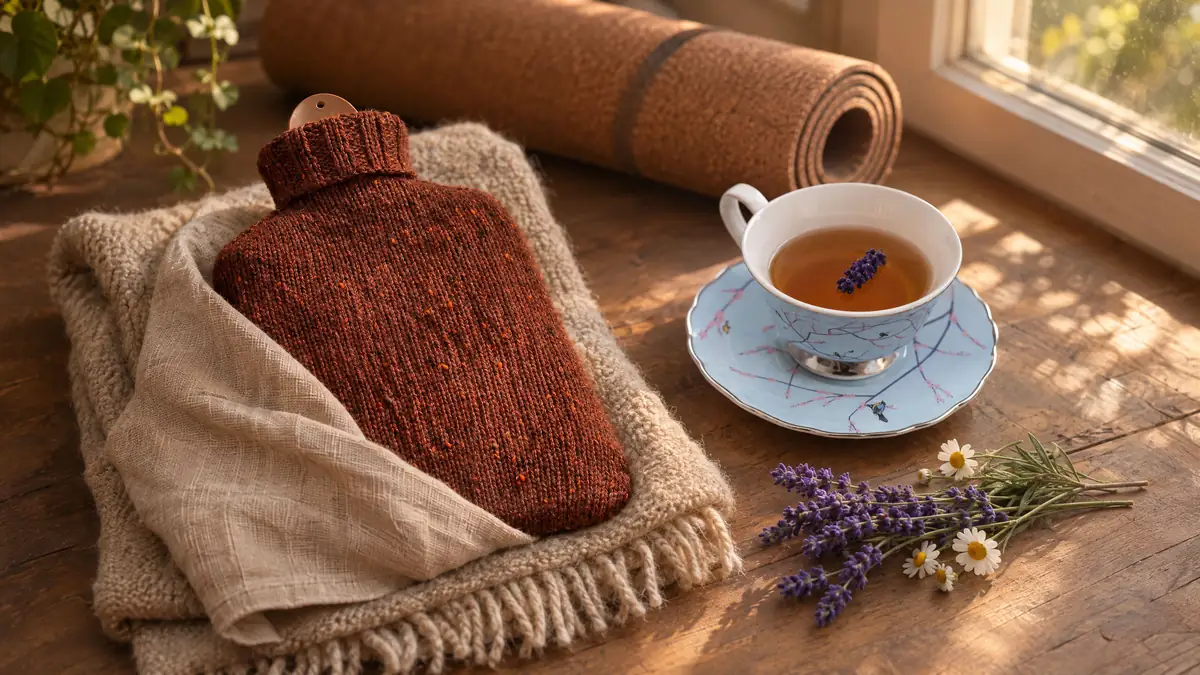
Heat. A 2026 review of 57 trials and 5,359 women found heat therapy likely reduces period pain, and may work about as well as anti-inflammatory painkillers with fewer side effects (Yuan et al., 2026). The HSE suggests a heat pad or a hot water bottle wrapped in a tea towel on your tummy, or a warm bath or shower.
Movement. A Cochrane review found exercise, from yoga to aerobics, “may provide a large reduction in the intensity of period pain”, though the quality of the evidence was low to very low. Most asked women to exercise at least three times a week for 45 to 60 minutes (Cochrane, 2019). The HSE names swimming, walking, cycling, yoga and Pilates.
Painkillers. The HSE says “Ibuprofen and aspirin work best to help manage period pain. You can also try paracetamol.” It also says not to take ibuprofen or aspirin if you have asthma or stomach, kidney or liver problems, and never to give aspirin to anyone under 16 (HSE).
Massage and TENS. The HSE suggests massaging around your tummy and back, or a TENS machine, which sends a mild electrical current to your tummy.
Hormonal contraception. Your GP may offer the pill, implant or injection, which the HSE says thin the womb lining, “making your period lighter and easing the pain”. That is always your decision to make, and if you ever want to stop, I’ve written about coming off the pill and what to expect.
That heat review also notes something worth knowing: anti-inflammatory painkillers don’t work for 18% of women (Yuan et al., 2026). If you’re one of them, that’s a reason to look further.
What about supplements and herbs?
The evidence on supplements for period pain is thin. The Cochrane review of 27 trials found “no high quality evidence to support the effectiveness of any dietary supplement for dysmenorrhoea”, with only low quality hints for a few, mostly from small trials in students (Cochrane, 2016). Newer reviews of single supplements and herbs found some benefit, but the authors of both called their studies limited or poor in quality (Nutrition & Dietetics, 2024; Chen et al., 2016).
That fits how I work. I won’t hand you a list to buy and hope one sticks. Supplements come in only where you genuinely need them, and only after I know your whole story.
When should you see a GP about period pain?
See your GP if your period pain is severe, if your usual pattern changes, or if you bleed between periods or after sex. The HSE also says to contact a GP if you have period pain with a thick or unpleasant smelling discharge, or pain during sex (HSE).
A few things make that appointment more useful:
Write your symptoms down first. The HSE suggests it, and NICE says a pain and symptom diary “can aid discussions” (NICE NG73).
Say what it stops you doing. Missed work, broken sleep, plans cancelled: that is the measure the HSE and NICE use, and under Ireland’s framework your account is the starting point. You don’t need a diagnosis before treatment starts.
Know the next step. If your pain doesn’t improve after 3 months of treatment, the HSE says your GP may refer you to a gynaecologist.
Ask about fertility if it’s on your mind. Ordinary period pain will not affect your fertility, the HSE says, but a condition behind it might.
What I look at when period pain is part of your story
When a woman comes to me with painful periods, I look at her whole story and her bloods, not just the week she bleeds. I want to get to the bottom of why yours hurts. I look at your digestion alongside your hormones, because your gut and your hormones are not separate problems. They’re one conversation.
In practice, that means:
- We start with your foundations and build from there. No strict rules.
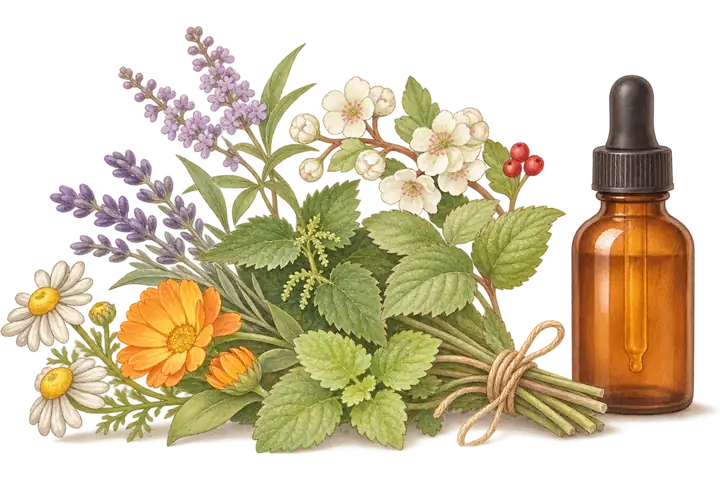
- I make your herbal tonic by hand, picking seven to ten herbs for you alone, so no two bottles are the same.
- You’re properly heard, the decisions about your body stay yours, and if you take medication, I check which herbs to leave out.
- Real change takes at least three months. Every woman is different, and these aren’t promises.
I work online on Google Meet, with women all over Ireland and beyond, and I keep my practice small by choice. You can read what working with me looks like before you decide.
Talk it through on a free 15-minute call
If your period pain is running your month, you don’t have to work out what’s behind it on your own. Book a free 15-minute call and tell me what your period pain stops you doing. We’ll work out the next step together.
Sources I've used
- HSE hse.ie/conditions/period-pain
- Cochrane, 2016 cochranelibrary.com/cdsr/doi/10.1002/14651858.CD002124.pub2/full
- HSE adenomyosis hse.ie/conditions/adenomyosis
- HSE endometriosis hse.ie/conditions/endometriosis
- NWCI nwci.ie/learn/blog-article/corrinne_hasson_women_are_waiting_nine_years_...
- Department of Health gov.ie/en/department-of-health/press-releases/minister-for-health-launch...
- HSE hse.ie/conditions/endometriosis/diagnosis
- Yuan et al., 2026 pubmed.ncbi.nlm.nih.gov/41657584
- Cochrane, 2019 cochranelibrary.com/cdsr/doi/10.1002/14651858.CD004142.pub4/full
- Nutrition & Dietetics, 2024 onlinelibrary.wiley.com/doi/full/10.1111/1747-0080.12835
- Chen et al., 2016 pmc.ncbi.nlm.nih.gov/articles/PMC4871956
- NICE NG73 nice.org.uk/guidance/ng73/chapter/Recommendations
